
Creating website content is easy. Getting the right people to find it through search engines takes more planning. You need content that answers real questions matches what people search for and makes information easy to understand. This is where SEO plays an important role.
If you are wondering what is SEO friendly content it is content written to help readers while making it easier for search engines to understand its topic and purpose. It combines useful information relevant keywords clear headings and a good reading experience.
Whether you run a business website manage a blog or write content for clients understanding SEO-friendly writing can help you attract relevant visitors and build trust. The good news is that you do not need complicated techniques to get started. A clear plan and a focus on readers can make a real difference.
What Is SEO Friendly Content?
SEO-friendly content is website content created to meet readers’ needs and follow search engine optimization best practices. It helps people find answers to their questions while helping search engines understand what a page covers.
This content can take several forms including blog posts service pages product descriptions landing pages and guides. Each type has a different purpose but the goal remains the same: provide useful information in a format that people can easily read and understand.
For example imagine someone searches for “how to choose running shoes.” A useful article would explain shoe types comfort fit and the needs of different runners. It would use relevant terms naturally organize information under clear headings and link to helpful resources where appropriate.
Simply repeating “running shoes” throughout the article would not make it SEO-friendly. The content must answer the searcher’s question and offer genuine value.
According to Google Search Central’s SEO Starter Guide useful original readable content is an important part of helping people find and understand your website.
Why Is SEO Friendly Content Important?
Good content can help your website attract visitors answer customer questions and support business growth. However publishing an article does not guarantee that people will find it. SEO-friendly content helps connect your information with people searching for relevant answers.
Here are some key benefits.
1. It Helps Improve Search Visibility
Search engines need to understand what your page is about before they can match it with relevant searches. Clear titles descriptive headings relevant terms and well-organized information help communicate the page’s subject.
When your content is relevant and useful it may become eligible to appear for searches related to your topic. Actual rankings depend on several factors so good writing alone cannot guarantee a top position.
2. It Attracts Relevant Visitors
Getting thousands of visitors is not always the goal. You want people who are genuinely interested in your information products or services.
For example a digital marketing agency that publishes a guide about local SEO can attract business owners looking for ways to improve their online visibility. These visitors are more relevant than people searching for unrelated marketing topics.
3. It Builds Trust With Readers
People are more likely to trust content that provides clear answers accurate details and practical advice. Supporting claims with reliable sources and showing relevant experience can make your content more credible.
Over time consistently helpful content can strengthen your website’s reputation and encourage readers to return.
4. It Supports Business Goals
SEO-friendly content can help visitors move from learning about a problem to considering a solution. A helpful service page for example can explain what a business offers who it serves and what customers can expect.
When the information meets the visitor’s needs it becomes easier for them to take the next step whether that means contacting your team requesting a quote or making a purchase.
Key Elements of SEO Friendly Content
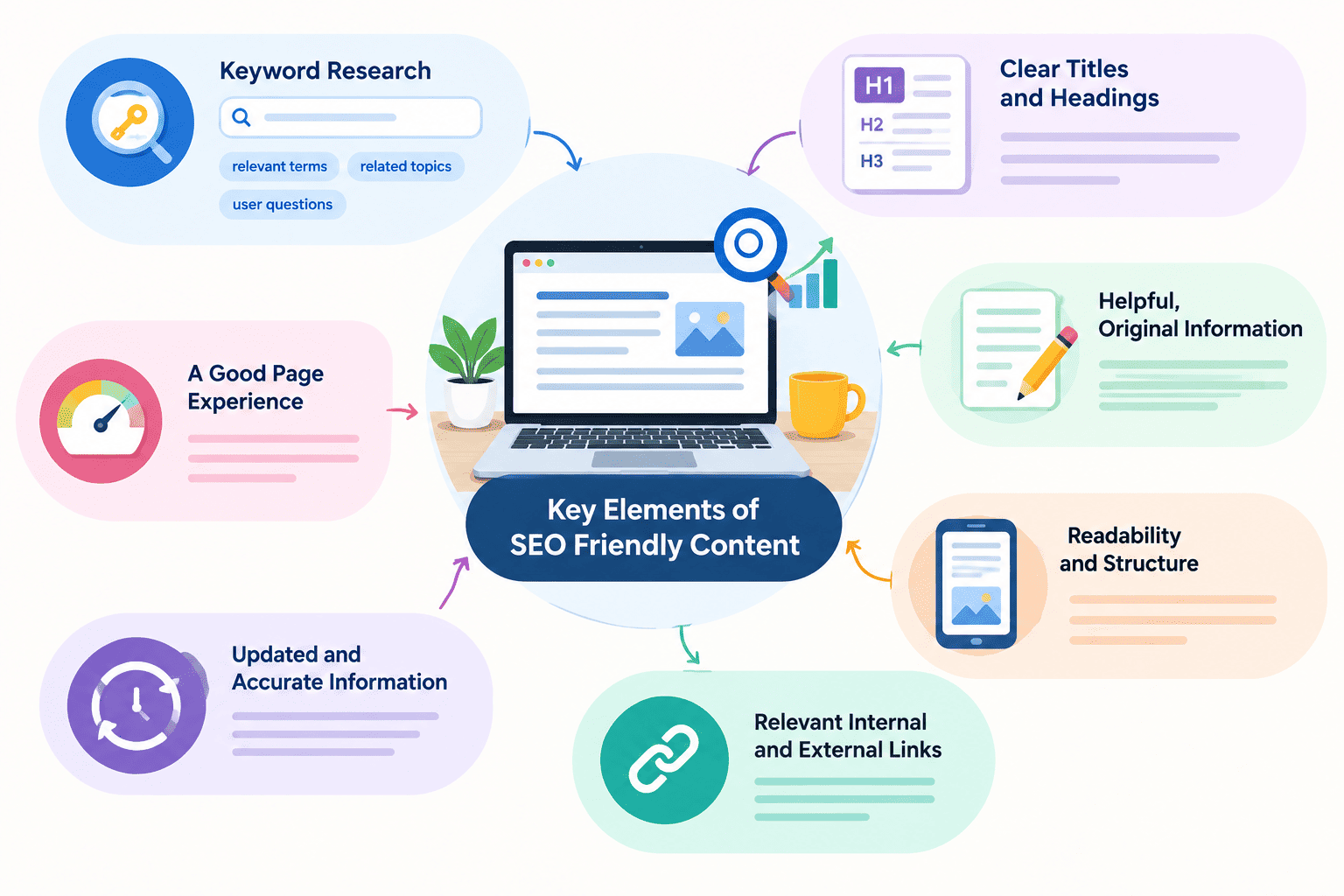
Understanding the main elements of SEO-friendly content makes it easier to create pages that serve both readers and search engines.
1. Relevant Keyword Research
Keywords are the words and phrases people type into search engines. Keyword research helps you understand what your audience wants to know and how they describe their needs.
Start by choosing one primary keyword for the page. Then identify related terms and questions that support the same topic.
For example if your primary keyword is “what is SEO friendly content” related phrases might include:
- SEO content writing
- SEO-friendly articles
- Content optimization
- Writing content for search engines
- People-first content
Use these terms where they fit naturally. You do not need to include every variation and you should never sacrifice clarity to fit in a keyword.
2. Clear Titles and Headings
Your title should tell readers what they can expect from the page. A clear heading also helps search engines understand the topic.
Use one main H1 heading for the page title then organize the content with H2 headings and H3 subheadings where needed.
For example:
- H1: What Is SEO Friendly Content?
- H2: Why Is SEO Friendly Content Important?
- H2: Key Elements of SEO Friendly Content
- H3: Relevant Keyword Research
Keep headings descriptive and make sure each section delivers what its heading promises.
3. Helpful Original Information
Original content offers something useful beyond what readers can already find everywhere else. This might include practical examples expert advice personal experience clear explanations or a better way to solve a problem.
Avoid copying competitors or rewriting their articles without adding meaningful value. Research can help you understand a topic but your final content should offer your own useful explanation.
4. Readability and Structure
Even accurate information can lose readers if it is difficult to follow. Use simple language short paragraphs and logical sections to make your content easier to scan.
Explain technical terms when they first appear. Use lists when they make steps or comparisons clearer but keep ordinary explanations in paragraphs.
A reader should be able to find the answer they need without struggling through unnecessary wording.
5. Relevant Internal and External Links
Internal links connect one page of your website to another. They help readers find related information and give search engines additional context about your site’s pages.
External links point to useful resources on other websites. They can support factual claims or help readers find official guidance.
Choose links based on their relevance not simply to increase the number of links in an article. Use descriptive anchor text so readers know what to expect when they click.
6. Updated and Accurate Information
Some topics change over time. SEO advice software features product prices and industry rules may become outdated.
Review older content when important details change. Correct inaccurate statements replace outdated references and add genuinely useful information where needed.
Updating a page should improve its value rather than simply changing the publication date to make it look new.
7. A Good Page Experience
Content is only one part of a successful website. Readers should also be able to access and use the page without unnecessary difficulty.
Make sure your page works on mobile devices loads reasonably quickly and uses a readable font. Avoid intrusive pop-ups that block important information.
Add descriptive alternative text to meaningful images so people using assistive technology can understand them. Image file sizes and formats should also support a smooth page experience.
These practices make content easier to use although no single element guarantees better rankings.
How to Create SEO Friendly Content Step by Step
Knowing the basics is useful but applying them to an actual article is what matters. Follow these steps to create content that meets readers’ needs and supports your SEO goals.
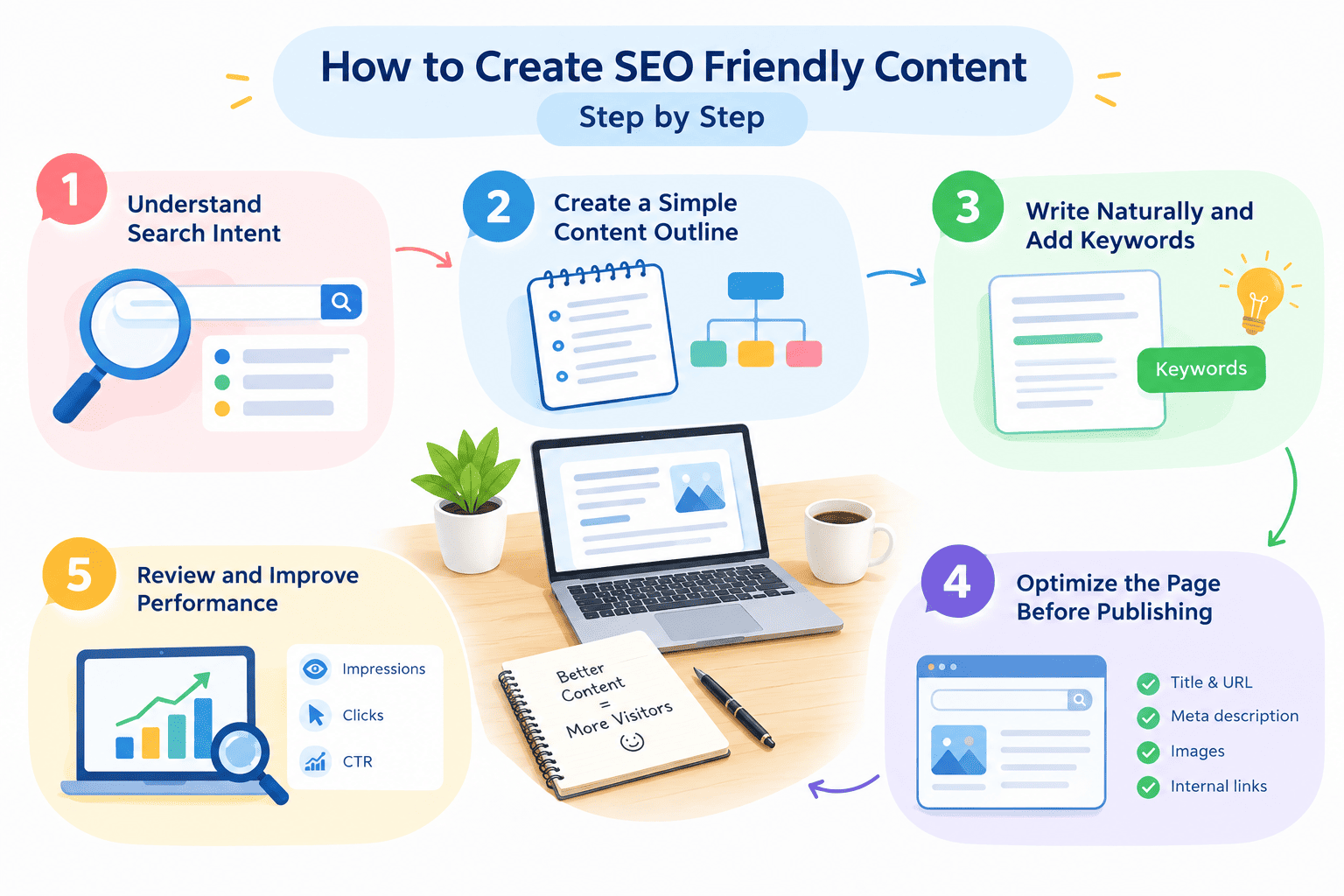
Step 1: Understand Search Intent
Search intent is the reason behind a person’s search. Someone searching for a definition wants a clear explanation while someone searching for the best project management software may want to compare different tools.
Before writing search your primary keyword and review the results. Notice the types of pages that appear the questions they answer and the information readers may still need.
Use these findings to plan content that matches the searcher’s goal instead of writing about the topic too broadly.
Step 2: Create a Simple Content Outline
Plan your main points before writing. Choose headings that follow a logical order and answer the most important questions first.
For an informational article you might start with a definition explain its benefits cover the main elements and finish with practical steps.
Your outline should help readers understand the subject without repeating the same ideas under different headings.
Step 3: Write Naturally and Add Keywords Where Relevant
Write the first draft with your audience in mind. Explain ideas clearly provide examples and use your primary keyword in the title introduction and relevant sections when it fits.
Include related terms naturally rather than forcing them into every paragraph. Search engines can understand related language so repeating the exact phrase excessively is unnecessary.
There is no universal keyword density that guarantees higher rankings. Focus on covering the topic well and making every sentence useful.
Step 4: Optimize the Page Before Publishing
Once the draft is ready review the page title URL headings meta description images and links.
Keep the URL short and descriptive. Write a meta description that summarizes the page and gives searchers a reason to visit without making promises the article cannot fulfill.
Use descriptive image names and alternative text where appropriate. Check that internal links work and that the page displays properly on mobile devices.
Step 5: Review and Improve Performance
After publishing monitor your content using tools such as Google Search Console. Review search queries impressions clicks and click-through rates to understand how people find your page.
If an article receives impressions but few clicks consider whether its title and description clearly communicate its value. If visitors arrive through unrelated searches review the page’s relevance and clarity.
Make changes based on actual performance and reader needs instead of guessing what search engines might prefer.
Common SEO Content Mistakes to Avoid
Even well-written articles can miss their goals when writers focus too much on optimization and too little on usefulness.
Watch out for these common mistakes:
- Keyword stuffing: Repeating the same phrase unnaturally makes content harder to read.
- Writing without a clear purpose: An article should answer a specific question or help readers complete a task.
- Copying competing pages: Rewording existing content without adding value gives readers little reason to choose your page.
- Ignoring search intent: A detailed guide may not satisfy someone looking for a quick definition.
- Using misleading headings: Every heading should accurately represent the information beneath it.
- Forgetting the reader: Content should help people first rather than exist only to attract search traffic.
Google’s guidance on helpful reliable people-first content emphasizes originality accuracy and satisfying the reader’s needs. It also makes clear that there is no preferred word count that automatically improves rankings.
FAQs
1. What is SEO friendly content in simple words?
SEO-friendly content answers readers’ questions clearly while helping search engines understand the topic and purpose of a page.
2. How do I make my content SEO-friendly?
Research keywords understand search intent write useful information organize it with headings and optimize titles links and images.
3. Does SEO-friendly content guarantee higher rankings?
No. Rankings depend on several factors including relevance competition website quality and how well a page meets searchers’ needs.
4. How many keywords should an SEO article contain?
Use one primary keyword and relevant related terms naturally. There is no fixed keyword count or density that guarantees success.
5. Is SEO-friendly content the same as AI-generated content?
No. SEO-friendly describes how content serves readers and search engines while AI-generated describes how content is produced.
Final Thoughts
Understanding what is SEO friendly content helps you create website pages that are useful to readers and easier for search engines to understand. It is not about repeating keywords making every article longer or following a rigid formula.
Start with a clear understanding of your audience and the questions they want answered. Research relevant keywords organize your ideas provide accurate information and make your content easy to read. Then review its performance and improve it when necessary.
Most importantly give readers a reason to choose your page. When your content solves real problems and provides information people can trust you build a stronger foundation for long-term search visibility and business growth.