
Your website might look great but is it actually performing well? Slow-loading pages broken links outdated content and hidden SEO issues can affect your website without you even noticing. These problems can drive visitors away and limit your chances of appearing in search results.
This is why website audit is important for any business that wants to build a strong online presence. A website audit helps you understand what’s working what needs improvement and which problems deserve your attention first.
Whether you run a small business website an online store or a blog regular audits can help you improve search visibility provide a better user experience and turn more visitors into customers.
What Is a Website Audit?
A website audit is a detailed examination of your website’s overall health performance content and search engine optimization (SEO).
It involves reviewing different parts of your website to identify problems that may affect how visitors and search engines interact with it.
A complete website audit usually covers:
- Technical SEO: Checking crawlability indexing broken links and website structure.
- On-page SEO: Reviewing keywords headings title tags and meta descriptions.
- Website performance: Measuring loading speed and responsiveness.
- User experience: Examining navigation design and mobile usability.
- Content quality: Finding outdated duplicate or unhelpful content.
- Website security: Checking HTTPS software updates and possible security risks.
The purpose is simple: identify what is holding your website back and create a practical plan to fix it.
Why Website Audit Is Important: 10 Key Benefits
A website audit provides useful information about your site’s performance and growth opportunities. Here are ten reasons you should make it part of your website maintenance routine.
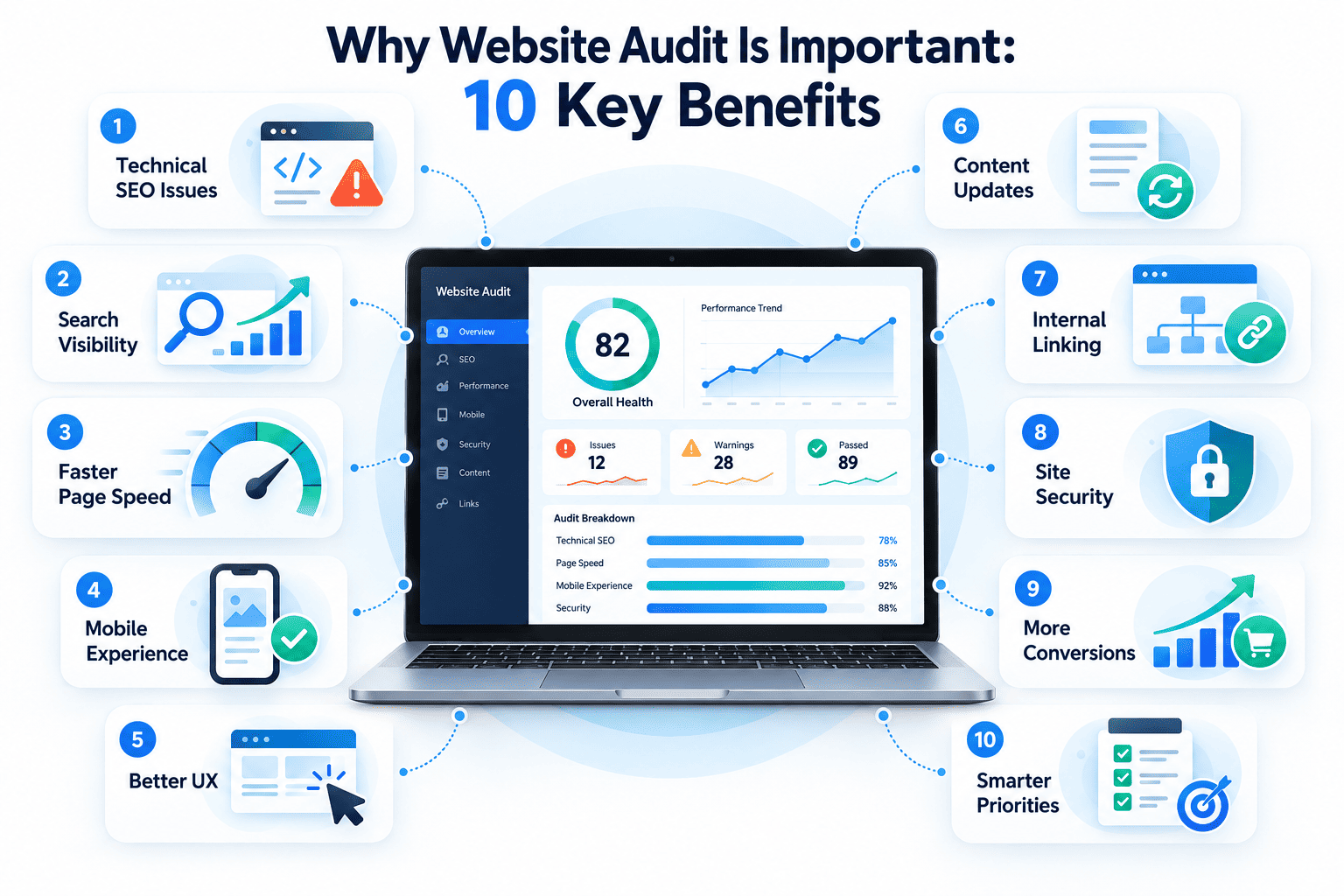
1. Identifies Hidden Technical SEO Issues
Some website problems are difficult to notice during everyday browsing. Your pages may look normal while technical errors prevent search engines from accessing them properly.
A technical website audit can uncover issues such as incorrect redirects broken links missing XML sitemaps duplicate URLs and accidental noindex tags.
For example an important service page might have a noindex directive that tells search engines not to include it in search results. Removing an accidental directive can make the page eligible for indexing again.
Finding these problems early helps you maintain a website that search engines can access and understand.
2. Improves Search Engine Visibility
One of the biggest reasons why website audit is important is its role in improving your SEO strategy.
Search engines need to discover crawl and index your pages before they can show them in relevant search results. If your website has indexing problems or confusing page structures valuable content may remain difficult to find.
An SEO audit helps identify these issues while reviewing keyword targeting page titles internal links and content relevance.
Using Google Search Console you can see which pages are indexed which search queries generate impressions and where technical problems exist.
Fixing audit findings can improve your website’s ability to compete in organic search although higher rankings are never guaranteed.
3. Helps Improve Website Loading Speed
A slow website can frustrate visitors before they even get a chance to explore your content.
Large images unnecessary scripts excessive plugins and poorly configured hosting can all contribute to slow loading times.
A website audit identifies performance issues and helps you determine which improvements will make the biggest difference.
Google’s Core Web Vitals measure important aspects of page experience including loading speed responsiveness and visual stability. For example Google recommends a Largest Contentful Paint (LCP) of 2.5 seconds or less for a good loading experience.
Compressing images removing unused code and improving caching can help your website load more efficiently.
4. Ensures a Better Mobile Experience
Many visitors access websites through smartphones so your website needs to work properly on smaller screens.
A mobile usability audit helps identify problems such as tiny text overlapping elements difficult navigation and buttons that are too close together.
Imagine a customer trying to complete a purchase on their phone but the checkout button is partially hidden. Even if your products are excellent that design problem can cost you a sale.
Regular website audits help you identify these frustrations and create a more comfortable browsing experience across different devices.
5. Enhances User Experience
Getting visitors to your website is only part of the job. You also need to help them find what they’re looking for.
Confusing navigation broken buttons unexpected pop-ups and poorly organized pages can make visitors leave.
A website audit examines how easily people can move through your site and complete common tasks.
For example if visitors struggle to find your contact page simplifying the navigation menu could make it easier for them to reach you.
Improving usability makes your website more helpful and reduces unnecessary obstacles between visitors and their goals.
6. Reveals Content Gaps and Outdated Information
Even well-written website content needs occasional updates.
Product details change services evolve and information becomes outdated. An audit helps identify pages that no longer meet visitors’ needs.
A content audit can uncover articles with outdated information pages targeting the same search intent missing topic coverage and content that receives little engagement.
Suppose you published a guide three years ago. Some recommendations may no longer be accurate even if the page still attracts visitors.
Updating that guide with reliable information and clearer explanations can make it more useful.
Google’s guidance on helpful people-first content also encourages website owners to focus on original accurate information that answers readers’ questions.
7. Strengthens Internal Linking and Website Structure
Internal links connect related pages on your website. They help visitors discover useful information and allow search engines to find additional content.
A website audit can reveal orphan pages broken internal links and important pages that are buried too deeply within your website.
For example if you publish a blog about digital marketing an article about SEO basics could link naturally to your guide on keyword research.
These connections make it easier for readers to explore related topics.
A clear website structure also helps search engines understand how your content is organized making internal linking an important part of your audit.
8. Helps Detect Security Problems
Website security directly affects visitor trust.
If your website contains security warnings outdated software or compromised pages users may hesitate to share personal information or complete transactions.
A security-focused audit checks HTTPS configuration software updates user permissions and signs of suspicious activity.
For an online store protecting customer information is especially important because visitors may enter payment and delivery details.
An audit cannot replace continuous security monitoring but it can help you identify weaknesses that need attention.
Addressing those risks protects your website’s reliability and gives visitors greater confidence when interacting with your business.
9. Helps Increase Website Conversions
Your website should encourage visitors to take meaningful actions whether that’s making a purchase submitting an inquiry or booking a service.
A website audit helps identify obstacles that may prevent these actions.
For example a service page might attract hundreds of visitors but generate very few inquiries. An audit could reveal an unclear call-to-action button a confusing contact form or missing service information.
Improving these elements may help more visitors complete their intended actions.
Audits also give you a starting point for testing changes and measuring results instead of making design decisions based on guesswork.
10. Helps You Prioritize Website Improvements
Without an audit it’s easy to spend time fixing minor issues while more serious problems remain unresolved.
A website audit gives you a clearer picture of your website’s condition so you can decide what to fix first.
For instance resolving an indexing issue affecting your main service pages is usually more urgent than adjusting a small design detail.
You can organize your findings based on their effect on visitors business goals and search performance.
This approach helps you use your time and budget more effectively. It also makes it easier to track progress and see whether your improvements are producing useful results.
How to Conduct a Website Audit
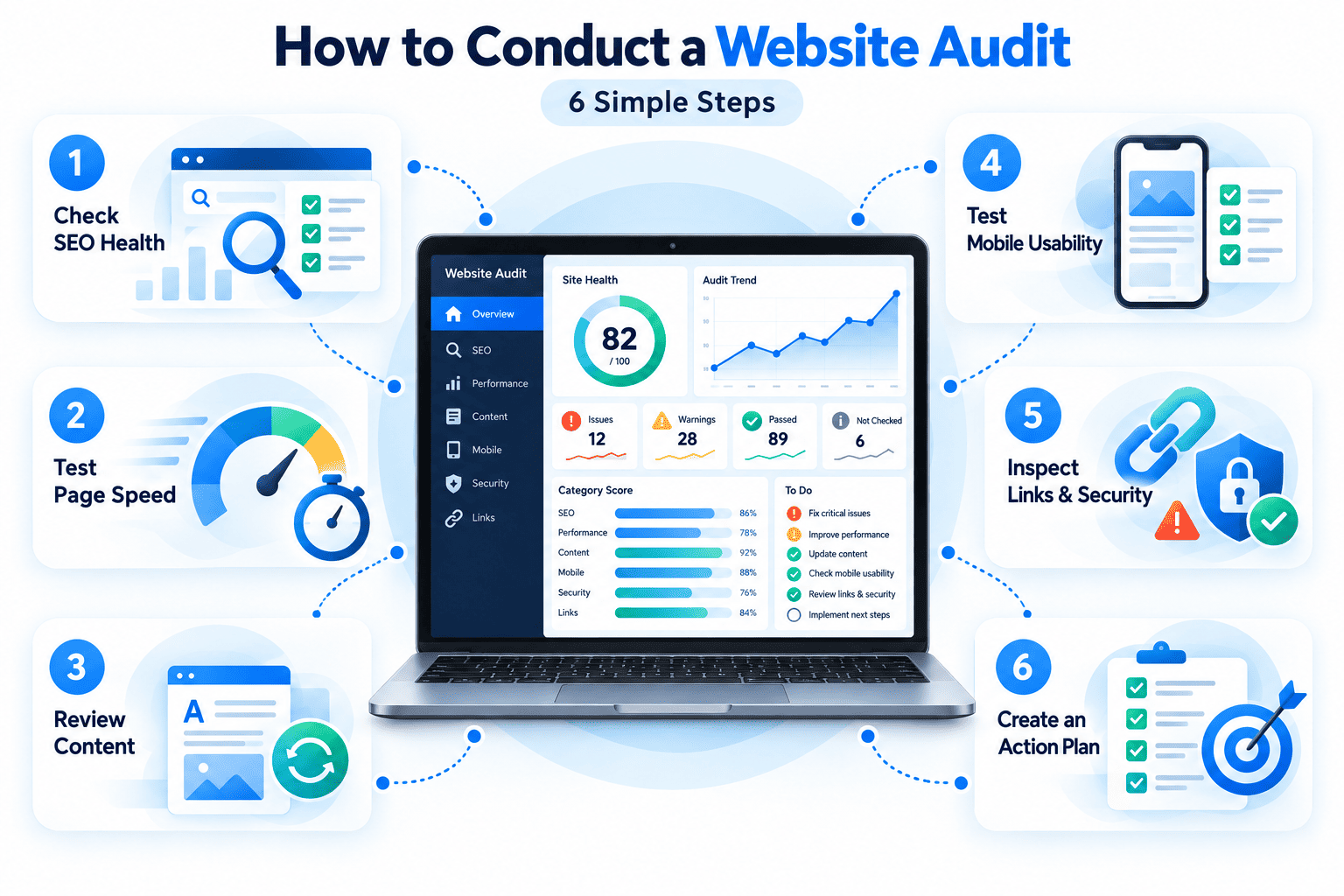
You don’t need to be a technical expert to start reviewing your website. Begin with a few practical steps.
Step 1: Check your website’s SEO health. Use Google Search Console to review indexing status search performance and reported issues.
Step 2: Test website speed. Run important pages through Google PageSpeed Insights to identify loading and responsiveness problems.
Step 3: Review your content. Look for outdated information unclear headings missing descriptions and pages that don’t fully answer visitors’ questions.
Step 4: Test mobile usability. Open your website on different screen sizes and check navigation readability buttons and forms.
Step 5: Inspect internal links and security. Check for broken links incorrect redirects HTTPS problems and outdated software.
Step 6: Create an action plan. List the problems you’ve found rank them by priority and track your progress as you fix them.
Free tools are useful for an initial review but larger websites may need dedicated crawling software or professional support for a complete technical audit.
How Often Should You Perform a Website Audit?
The right frequency depends on your website’s size complexity and how often you make changes.
For many small business websites a detailed audit every three to six months is a reasonable starting point. Large websites online stores and frequently updated platforms may benefit from more frequent checks.
You should also review your website after a major redesign migration significant traffic decline or important software update.
Routine monitoring between full audits helps you catch problems before they become more difficult to manage.
FAQs
1. Why website audit is important for SEO?
A website audit identifies technical errors content weaknesses and indexing problems that may limit organic search performance.
2. What is the main purpose of a website audit?
Its main purpose is to evaluate website health identify issues and recommend improvements for performance usability and SEO.
3. Can a website audit improve Google rankings?
An audit can reveal problems affecting search visibility but ranking improvements depend on the fixes made and other factors.
4. How long does a website audit take?
A basic audit may take a few hours while a detailed audit of a large or complex website can take several days.
5. Are website audits necessary for small businesses?
Yes. Small business websites can also develop technical content and usability problems that affect visitors and potential customers.
Final Thoughts
Understanding why website audit is important helps you make better decisions about your website’s performance security content and SEO.
A website may look professional on the surface while hidden issues affect its ability to attract and serve visitors. Regular audits give you a way to discover those problems and address them before they grow.
You don’t need to fix everything at once. Start with the issues that affect your most important pages make improvements and measure the results.
Make website auditing a regular habit not something you do only when traffic drops or problems become obvious.
Sources: